
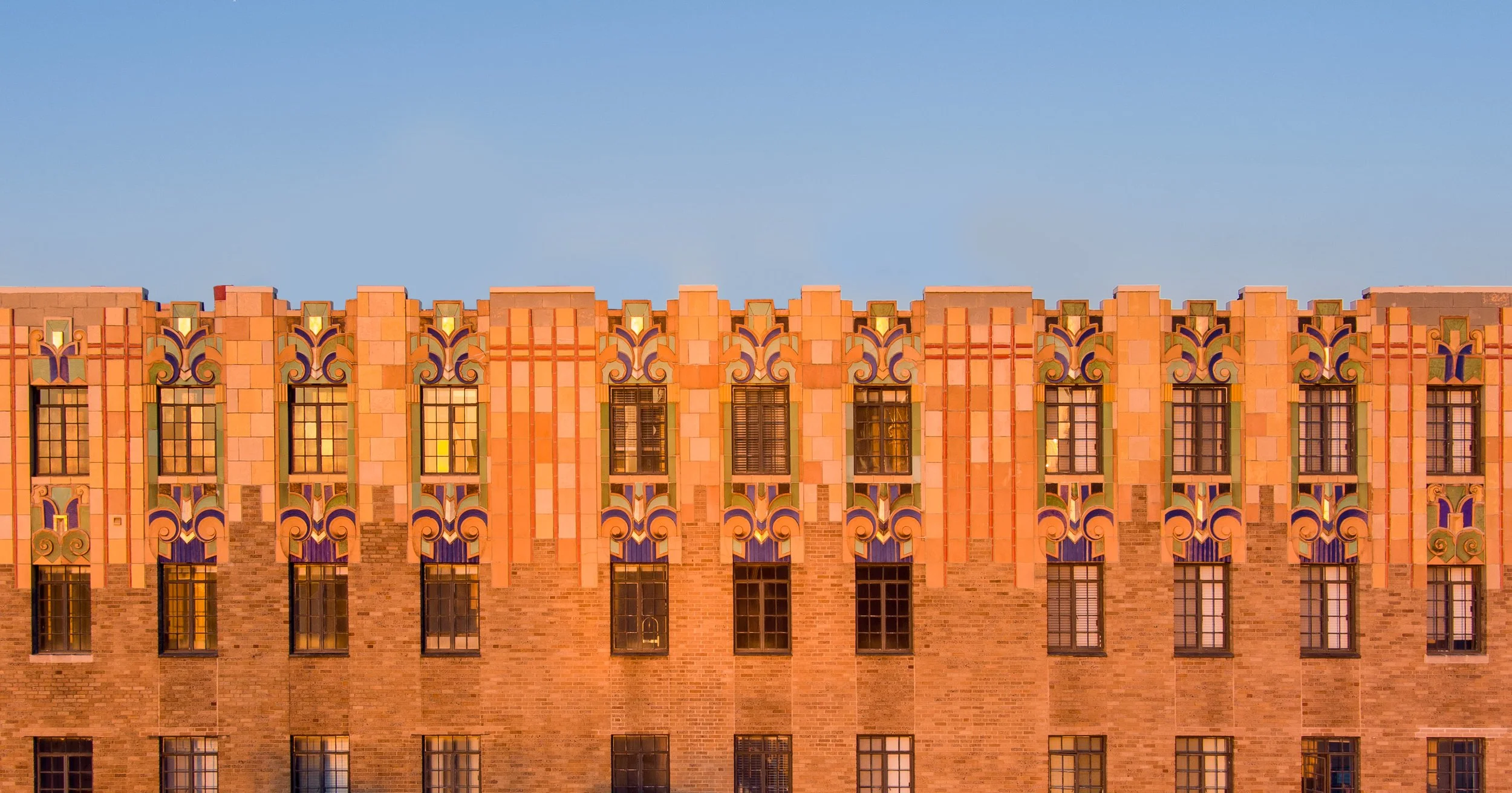

Historic apartment buildings hold a special place in my heart. They possess an ornamental beauty I rarely see in newer buildings.
Most of the apartment buildings I photograph are modern from the inside out, from glass exteriors to luxurious interior amenities. I enjoy the occasional opportunity to photograph much-older buildings, including ones that housed historic businesses in the early 20th century before being converted into residential spaces.
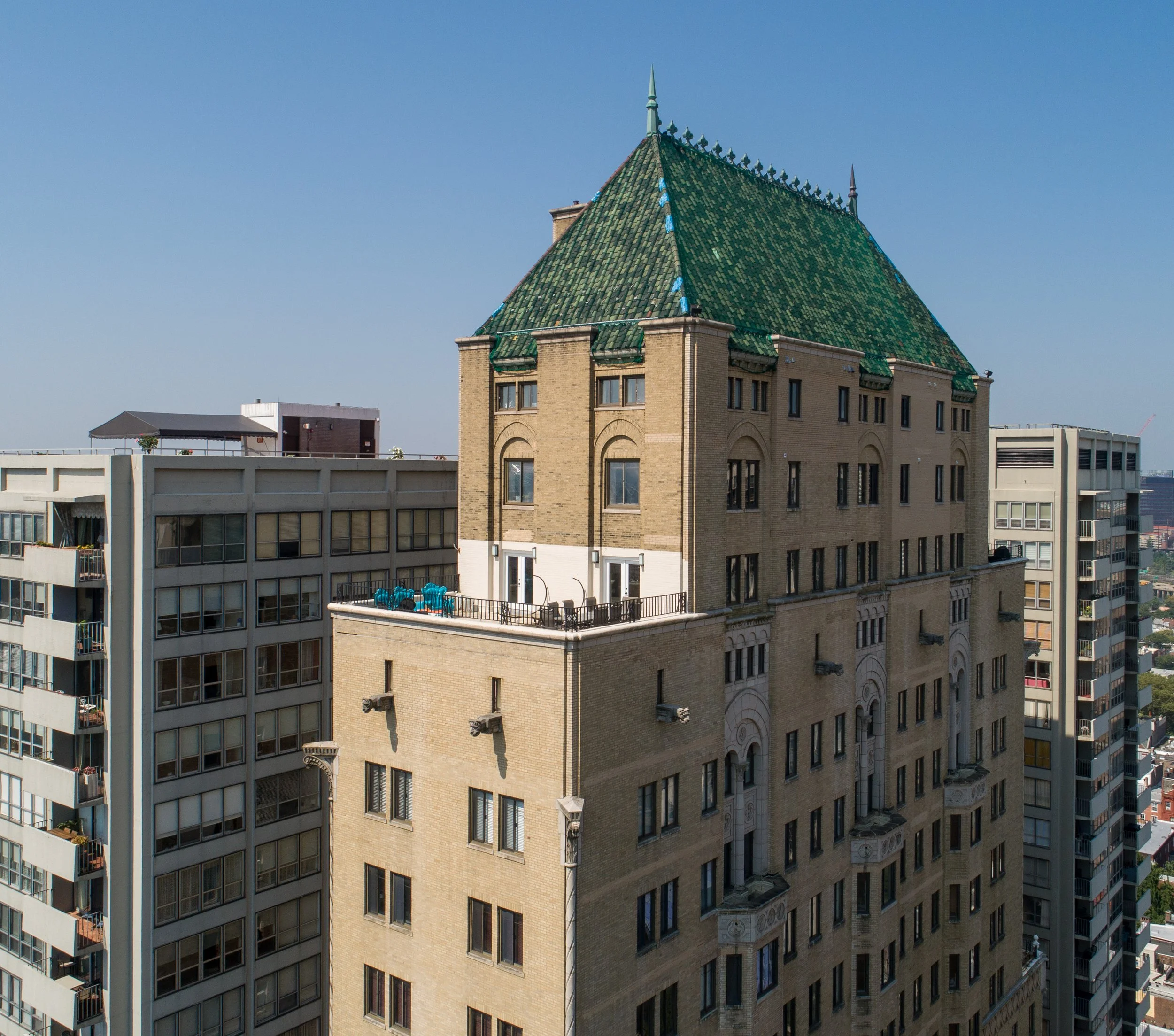
At 222 Rittenhouse Square, birds and drones alike can observe the tile roof and gargoyles…
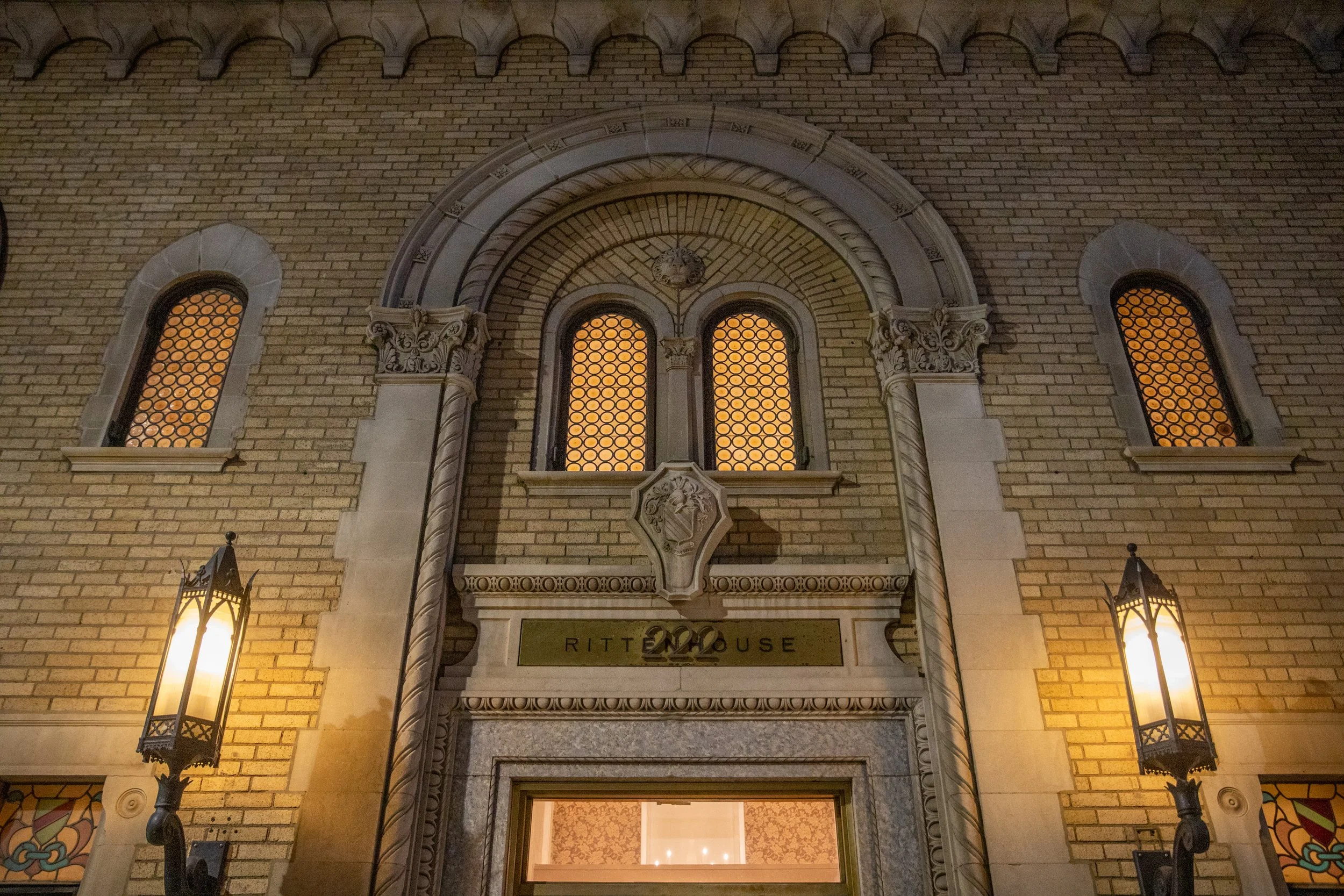
…while those of us at ground level can enjoy the beautiful medieval-style sconces and windows.
“Pre-war” buildings combine Art Deco and other era-specific influences with a level of intricate detail and decorative touch rarely seen in modern apartment complexes. Many of these buildings are nationally recognized historic landmarks and have retained their original exterior features amid the modernization of their interiors.
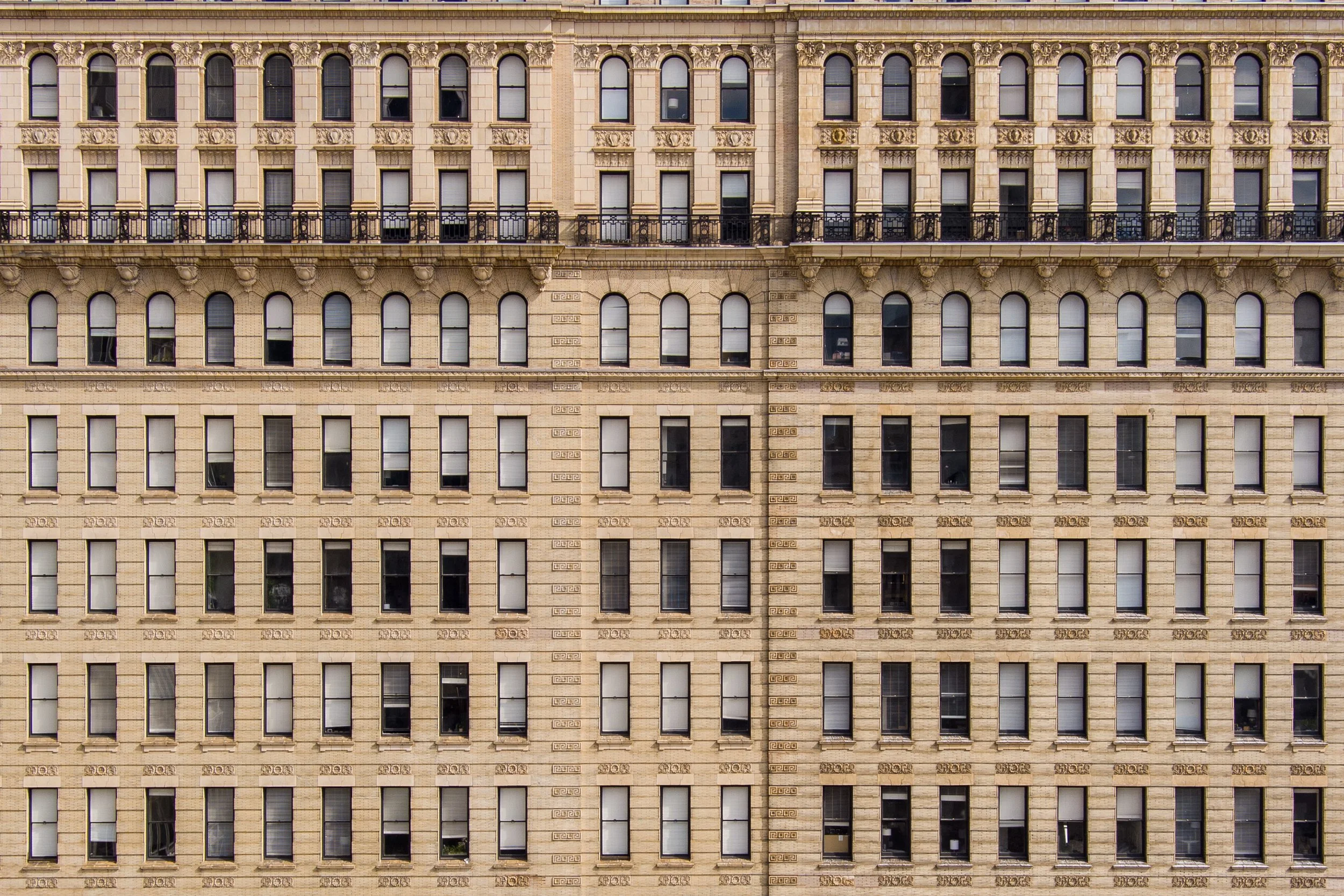
Arched windows and railings top this textured apartment building, now known as One City.
In contrast to the minimalist glass exteriors of modern commercial structures, these buildings feature ornate, sculptural exteriors made of terra-cotta or tile. Even after extensive interior renovations, the high ceilings, old fireplaces, and original hardwood floors remain as aesthetic details prized by prospective tenants.
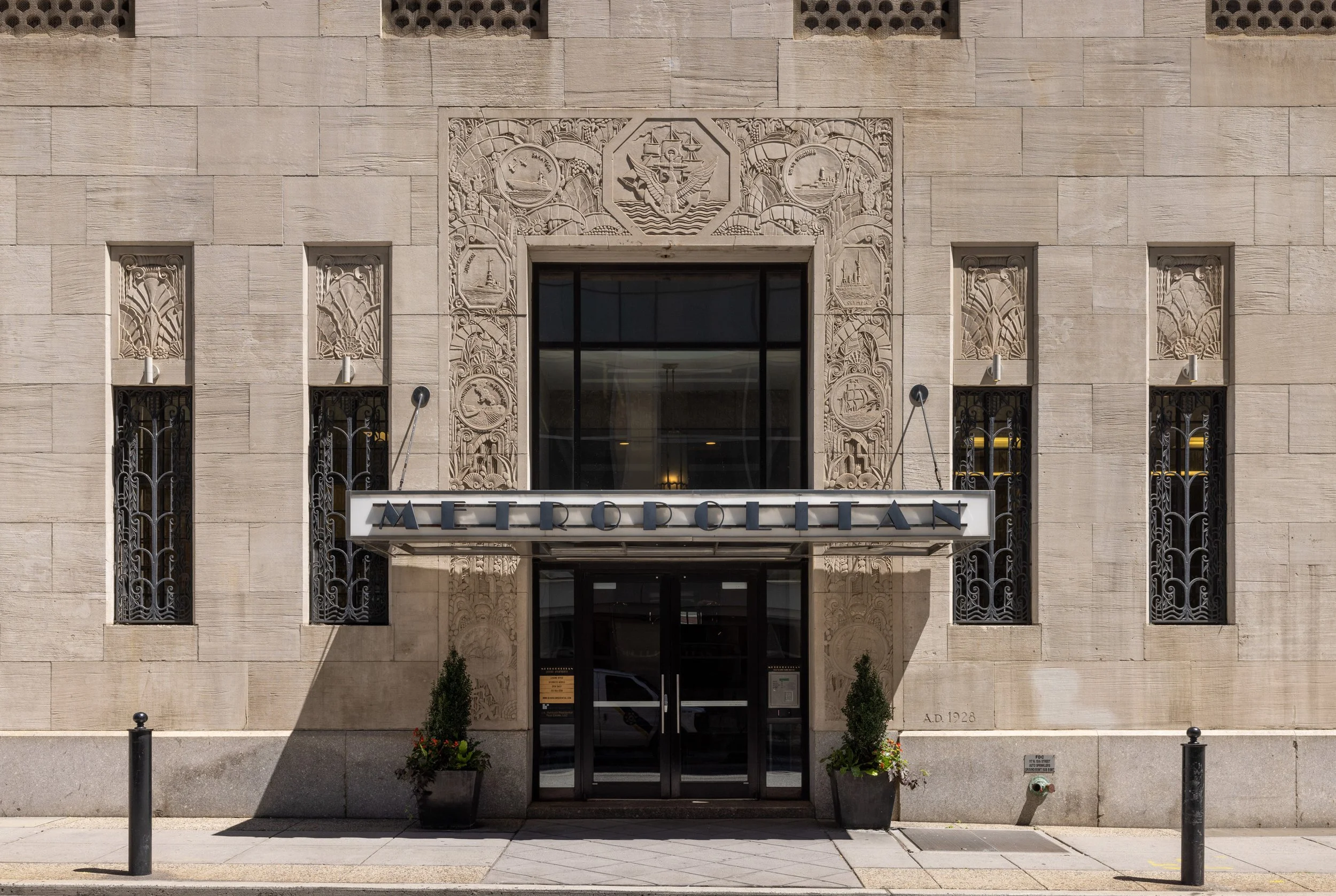
Incised stone details frame the entrance and windows of the Metropolitan in Center City.
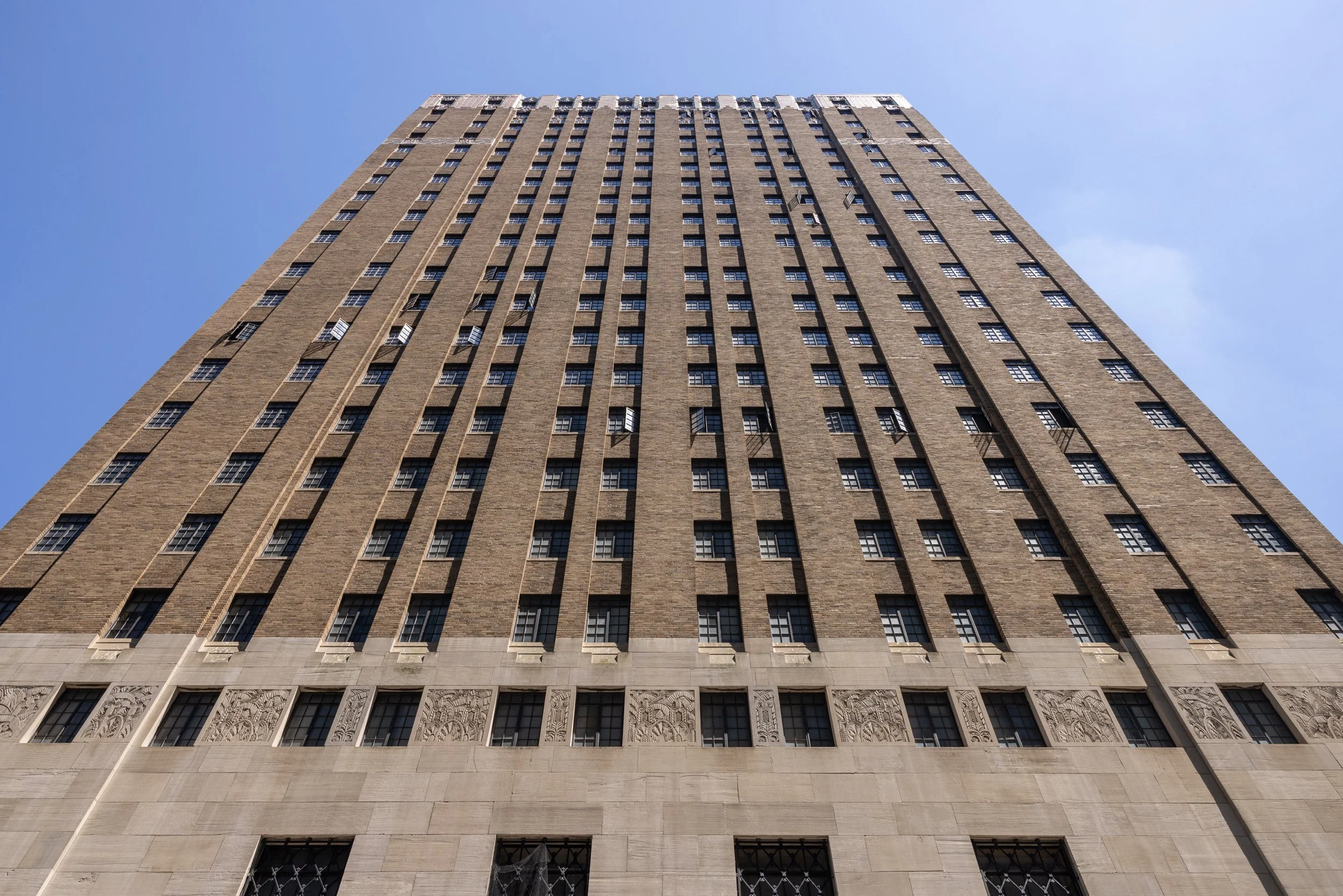
In homage to its roots as the YMCA Armed Forces Building, the now-apartment complex features a state-of-the-art athletic facility for its residents to use.
For anyone who’s ever wanted to live inside a museum, residing among these carefully preserved features is probably the next best thing.
The apartments inside may be updated, but Philadelphia’s pre-war buildings still retain the gorgeous, historically significant exterior features of early 20th century architecture.
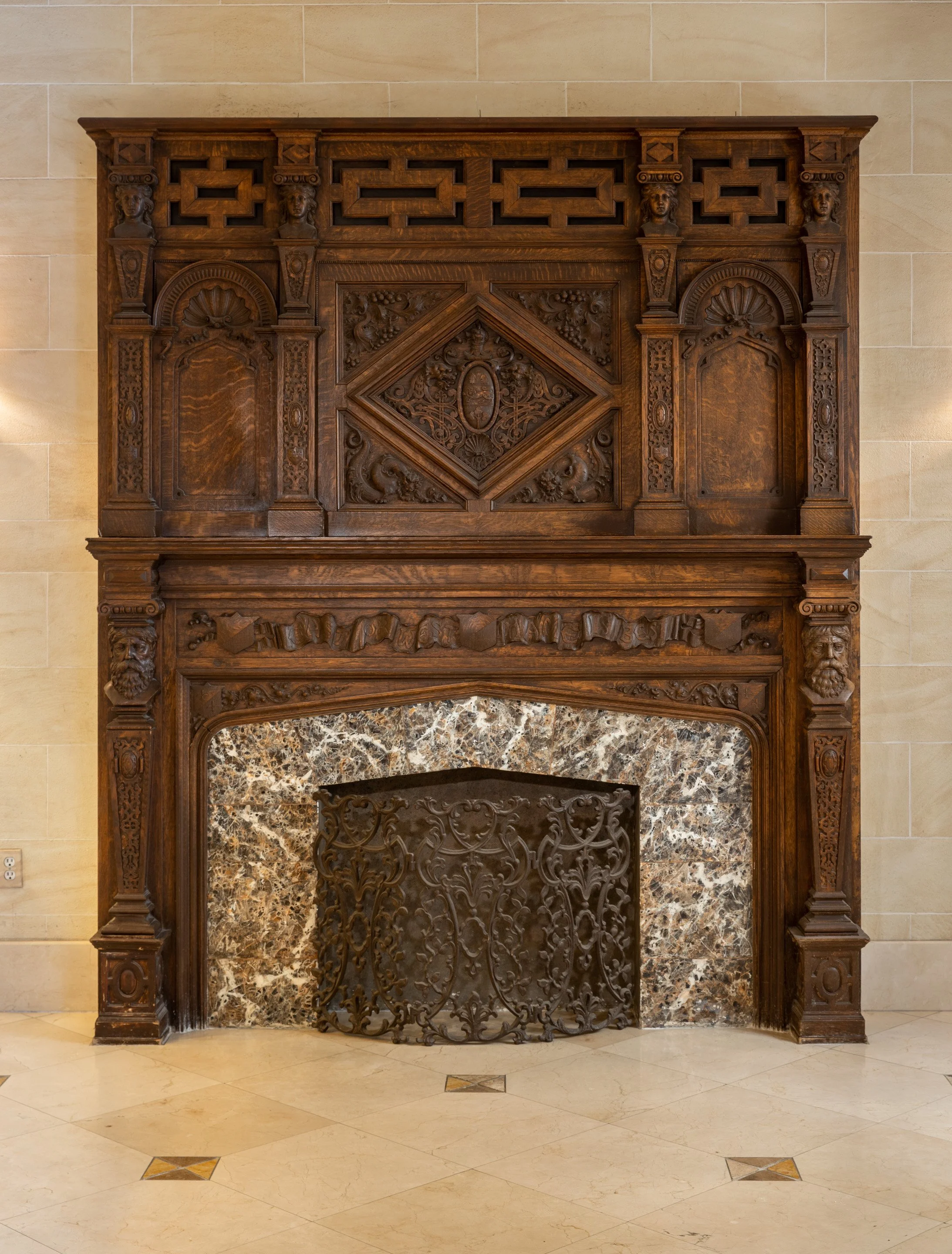
How many apartment buildings have a fireplace like this in the lobby? 222 Rittenhouse Square does.