
A lot of History, A little Mystery
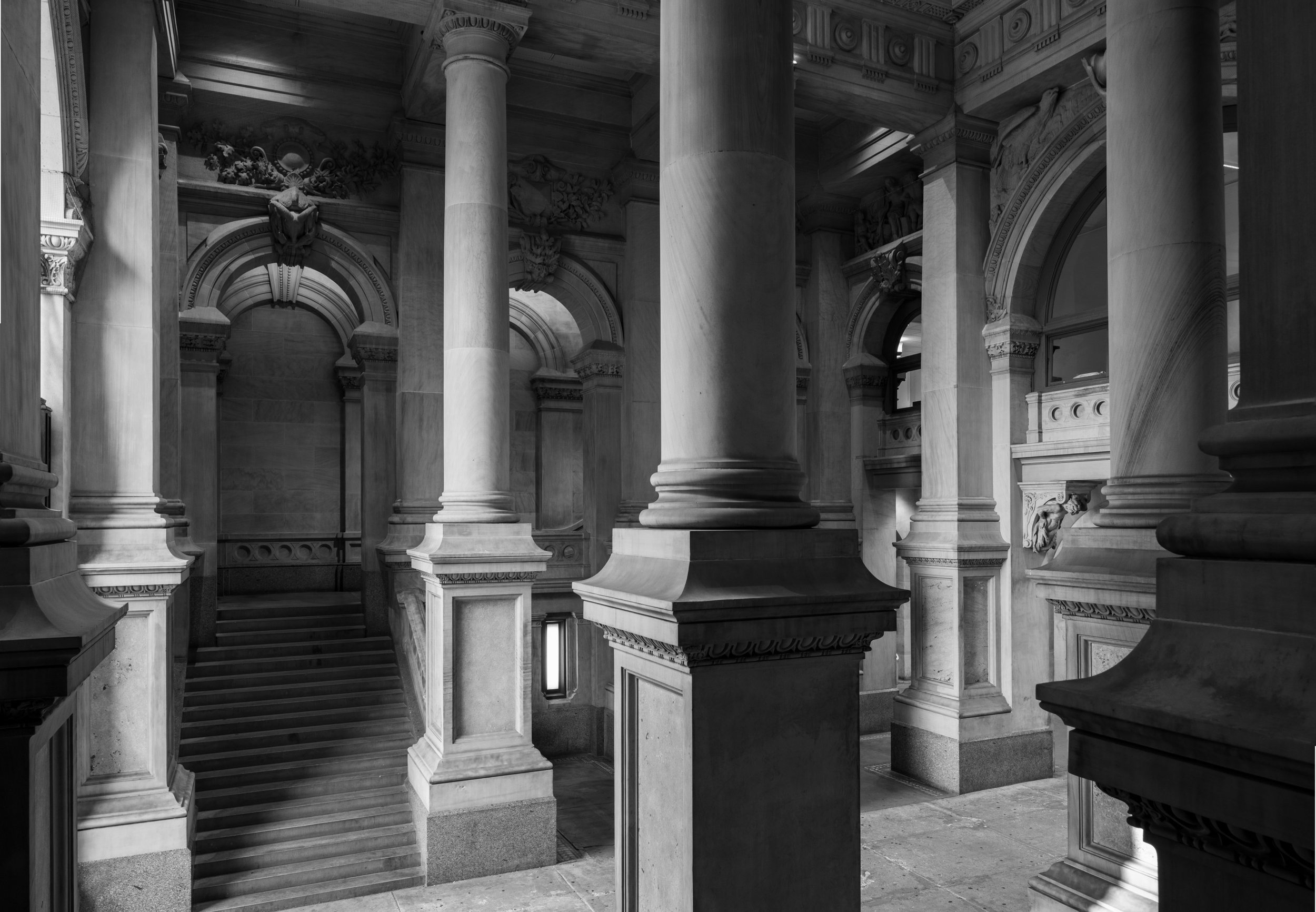
Is it 1755 or 2025? Standing in the dimly lit east entrance to City Hall feels like traveling back in time.
When photographing a building as well known as Philadelphia City Hall, the challenge is finding a new story to tell or a new feeling to evoke. While it’s normally bustling with activity, I wanted to depict a subtly mysterious side to its classical architectural elements. I took this photo in broad daylight on a weekday last fall, but you’d never be able to tell from the image alone. Without people in the shot and after converting to grayscale, the result feels timeless and could easily be mistaken for one of Giovanni Piranesi’s 18th-century etchings.
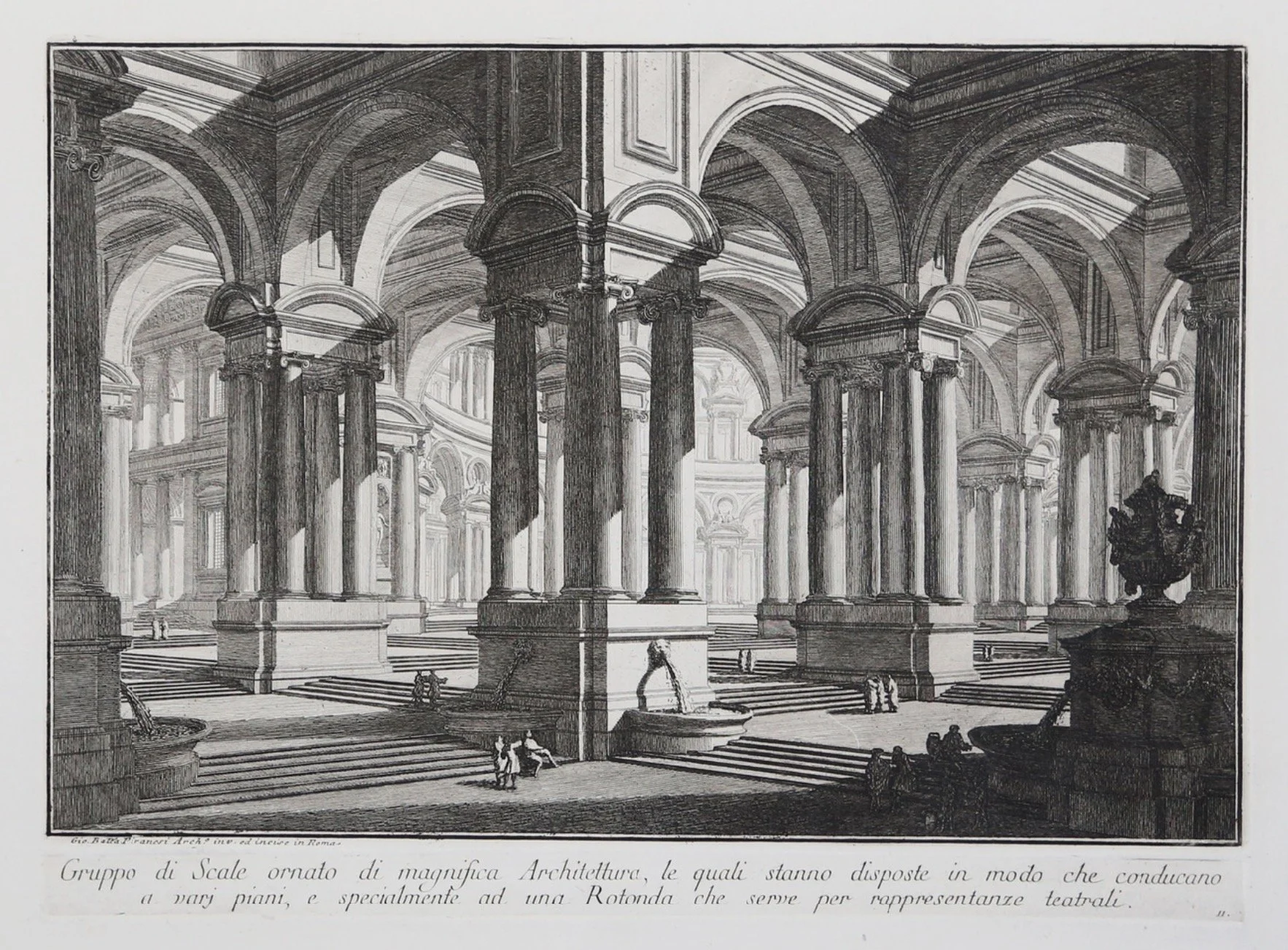
Giovanni Battista Piranesi, “Stairways Adorned by Magnificent Architecture.” Image from The Met.
As part of my process when photographing buildings, I often walk a full lap around my subject to size it up from different points of view. Angles, lighting, and direction all matter—as readers of this blog may remember, a building’s entire vibe can change in a matter of hours. While twilight remains my favorite time of day for a photoshoot, I found plenty to like about City Hall in daytime.
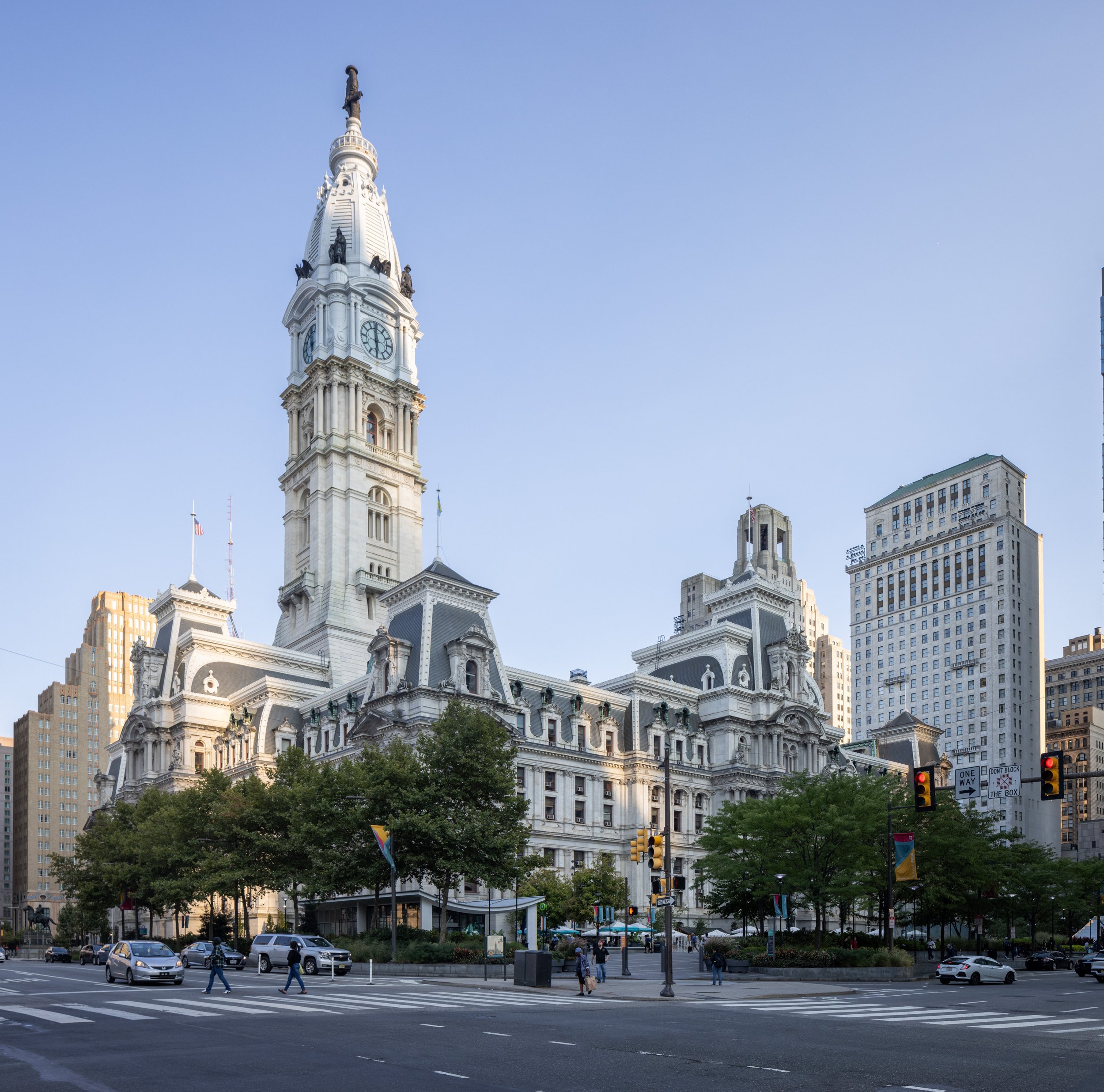
The clock tower is quite literally highlighted by the afternoon sun.
Of course, a building this large is overflowing with thoughtful details. Some 250 stone sculptures by Alexander Milne Calder adorn City Hall from top to bottom, representing historical influences, virtues of government, eras of Philadelphia’s development, and more.
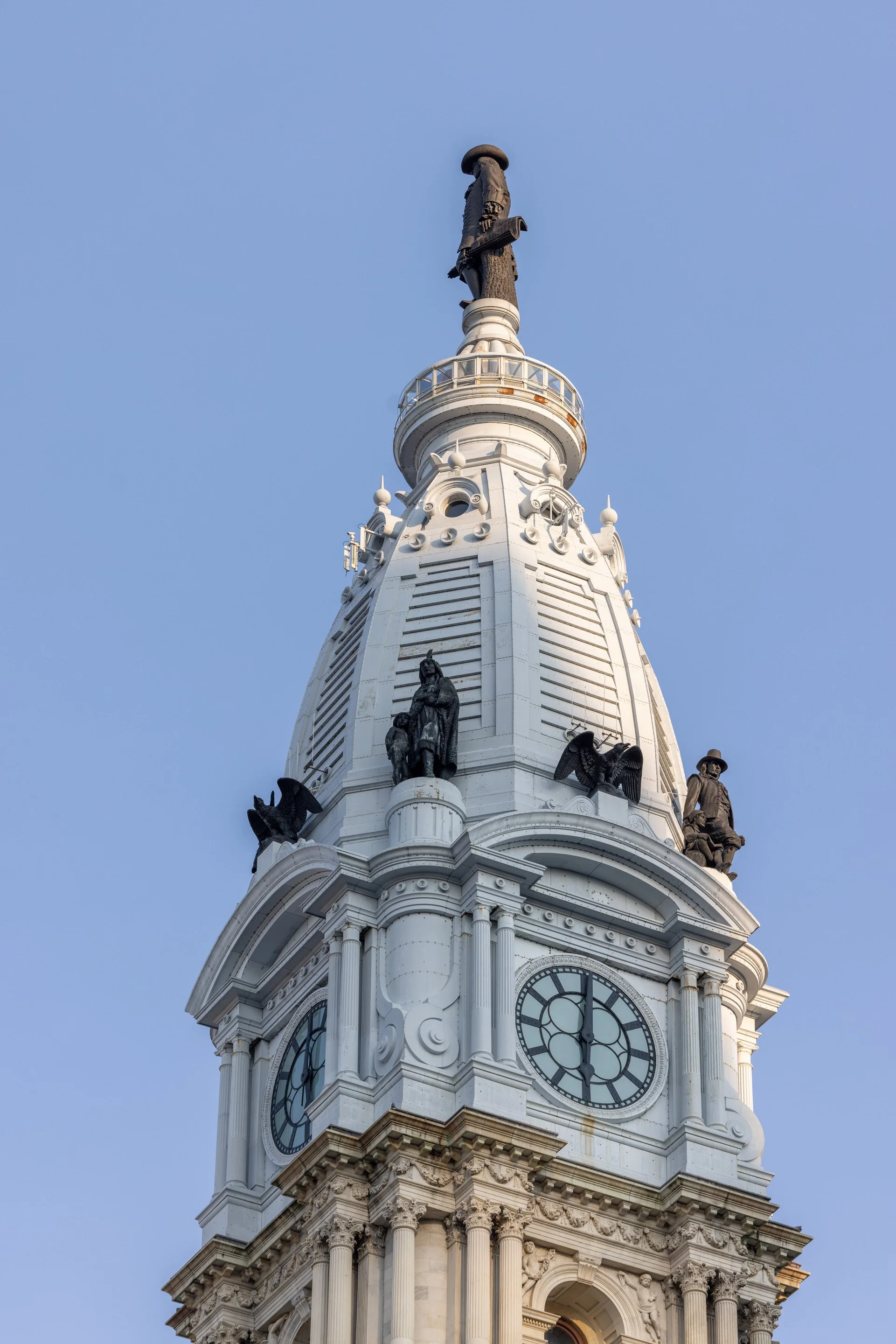
With a telephoto lens, I can photograph Penn and friends in stunning clarity—even from the ground half a block away.
Most prominent and notable among them is the 37-foot bronze statue of William Penn that sits atop the clock tower.
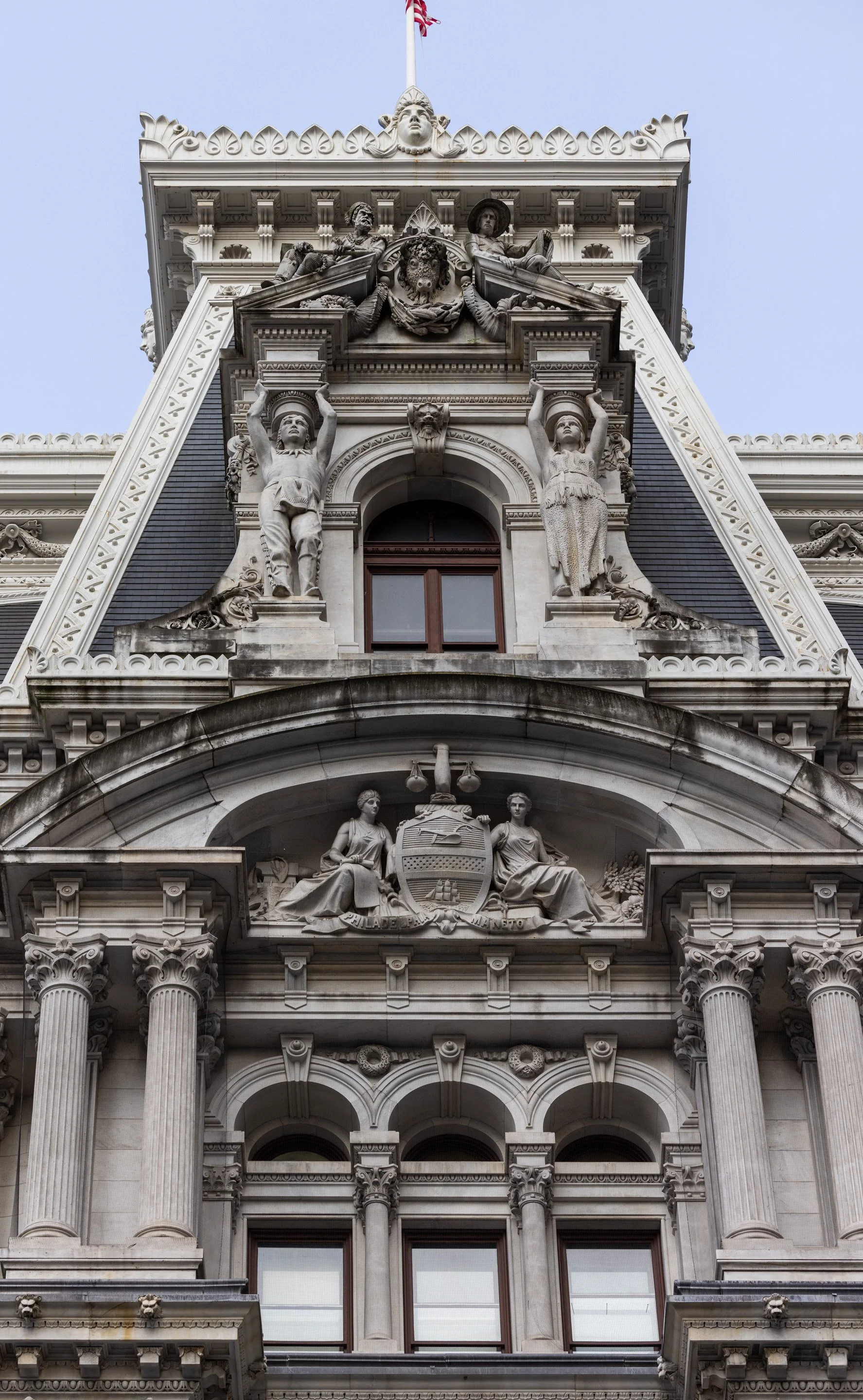
From top to bottom: the head of a bison, two figures representing Native Americans, and Calder’s interpretation of the Philadelphia city seal.
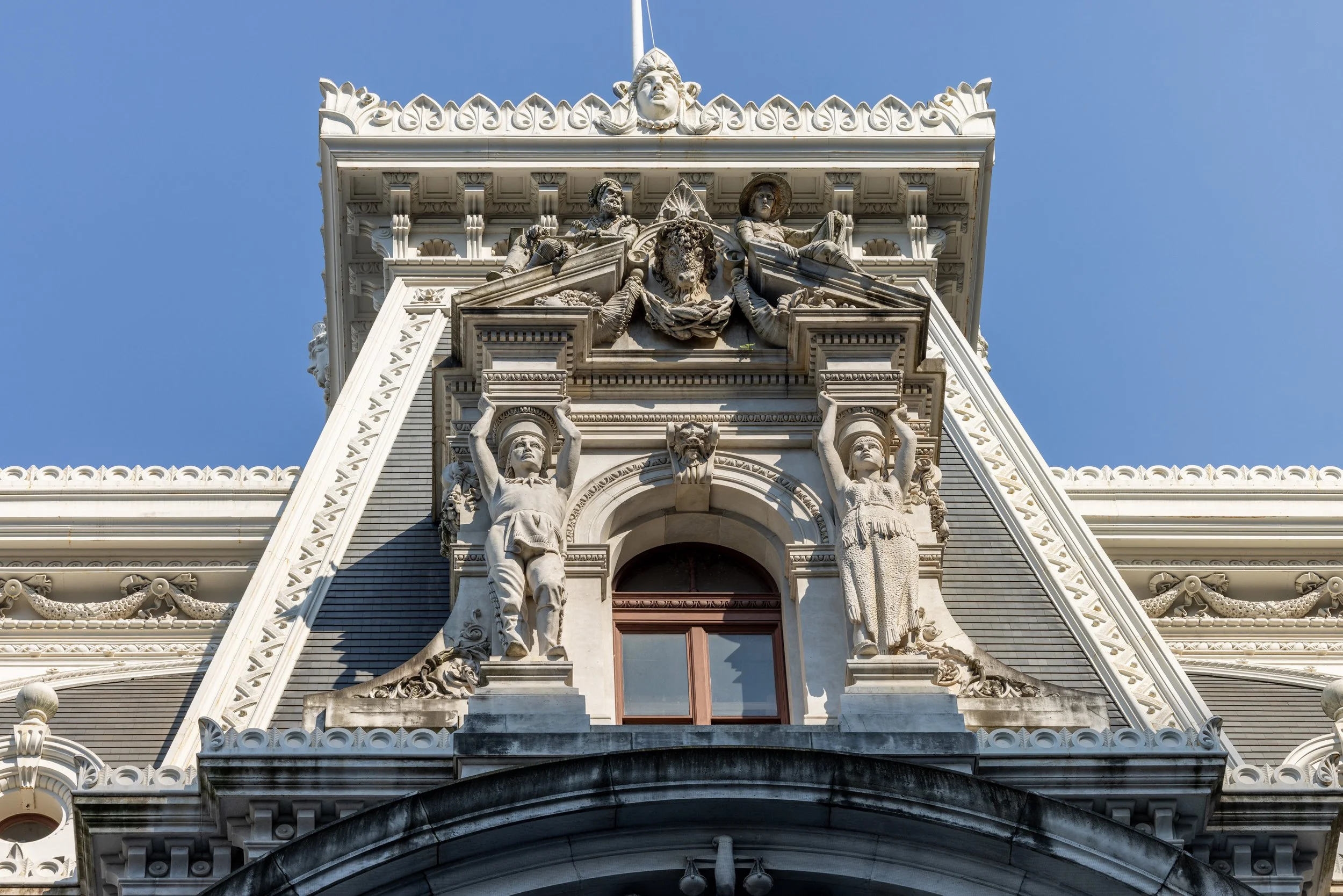
Thanks to a strategic angle and good daylight, you don’t have to crane your neck to enjoy the top-level sculptures of the western façade!