
Home-Field Advantage
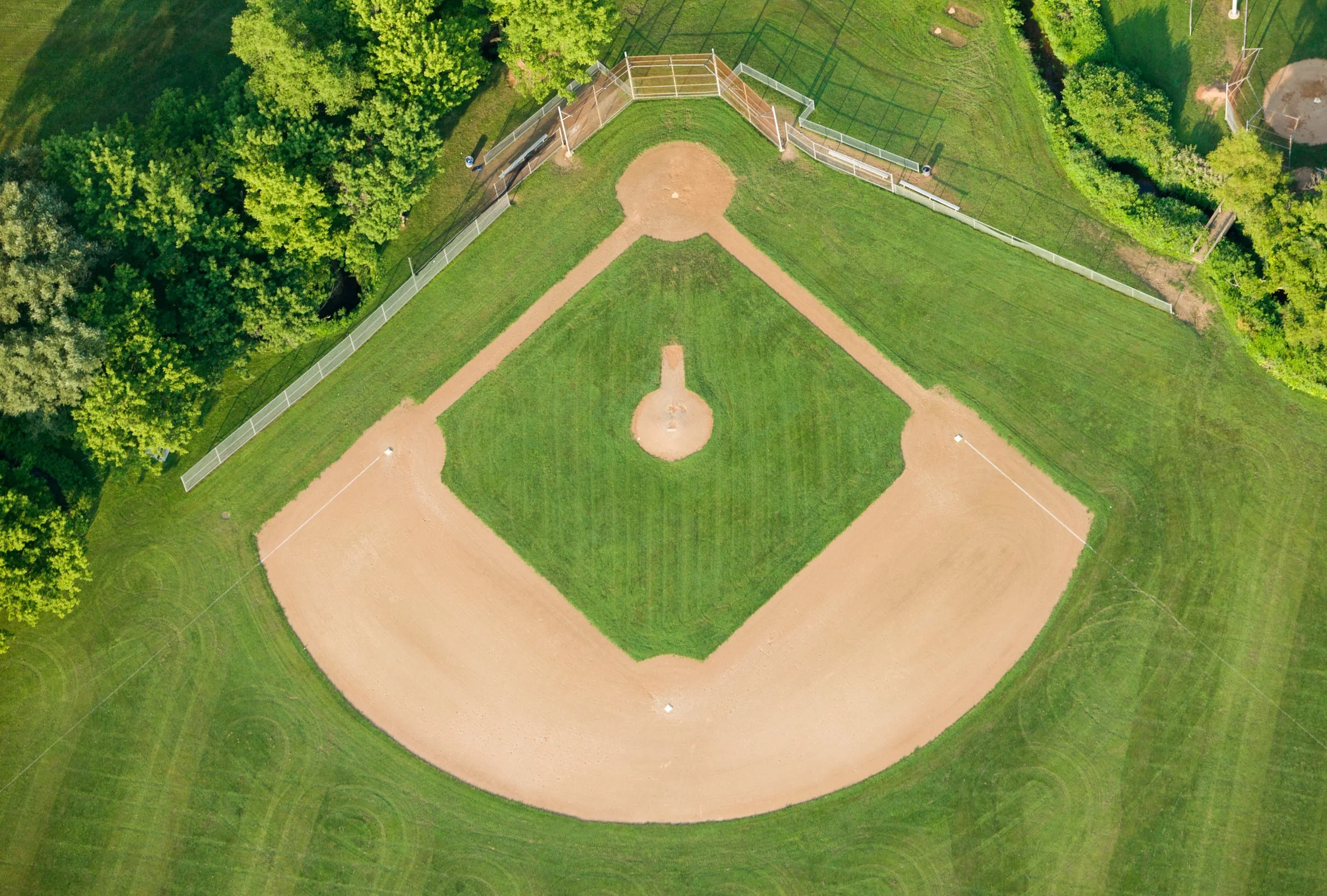
Bright green grass and freshly raked dirt make this field look extra sharp for spring.
Years ago, I was in a helicopter somewhere above southeastern Pennsylvania, capturing aerial shots for a client, when I noticed all the ball fields dotting the landscape. Much like the gemstone, these diamonds stood out amid their surroundings—whether cities, suburbs, or farmland.
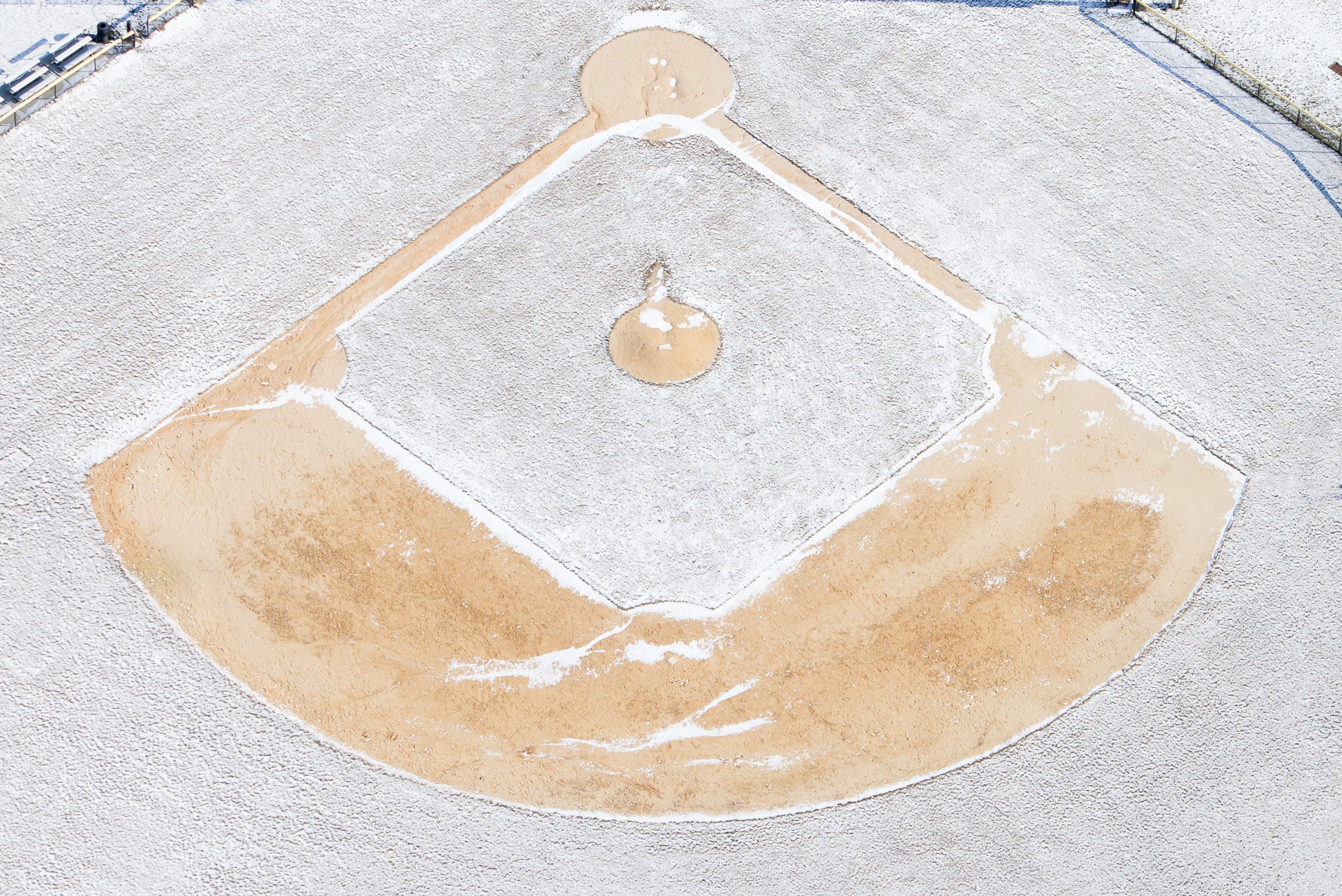
Frost sticks more to grass than to dirt, so the classic diamond shape still shines through in winter.
As a longtime fan of both baseball and aerial photography, I was inspired to combine the two and start a collection of aerial baseball field photographs. Personal projects like this and my trip to Mesa Verde are great opportunities to apply my existing skills in fresh ways by experimenting with framing and composition.
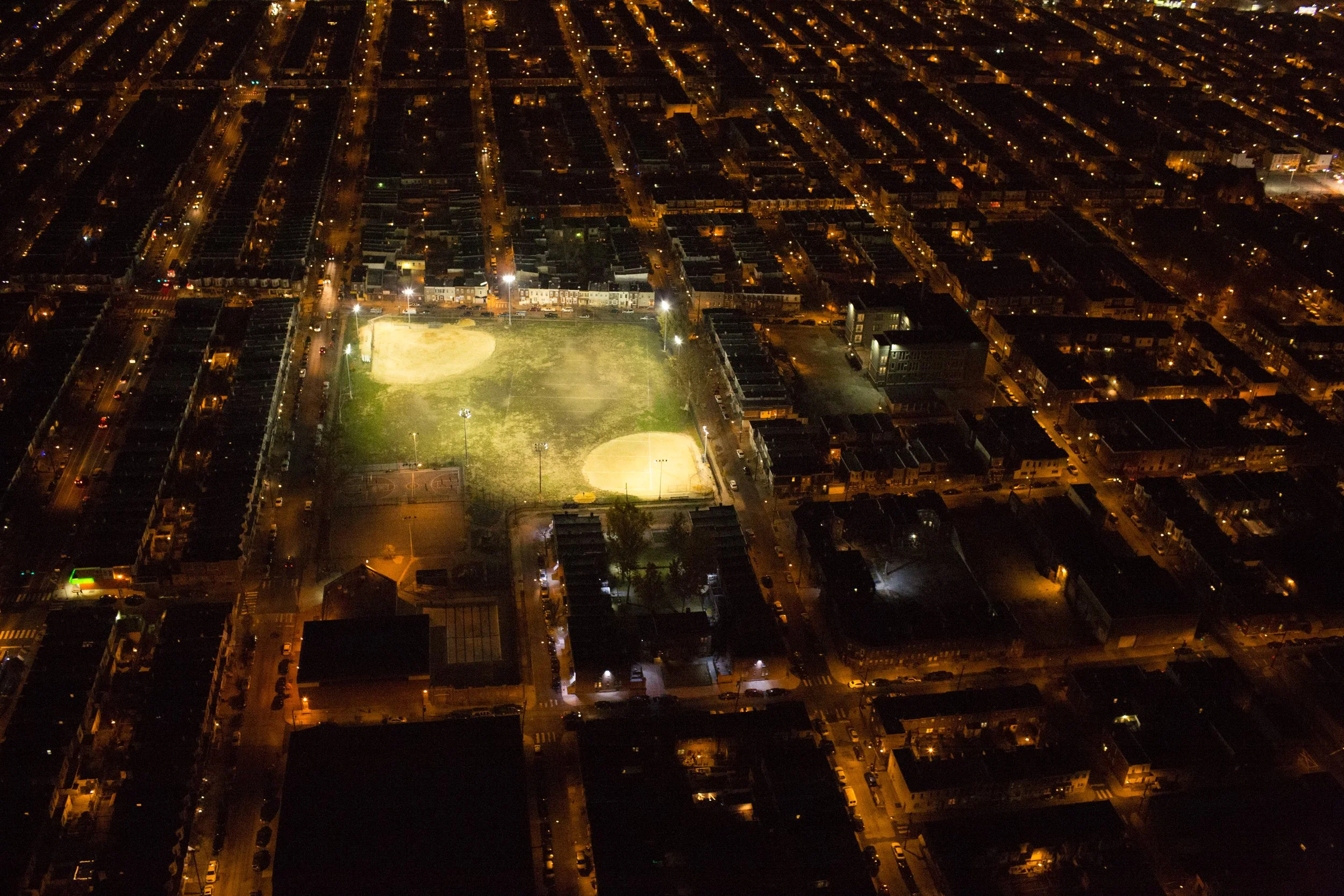
When lit up at night, these diamonds sparkle just like the gemstone.
And just like any other Benson Photo, each of these images tells a story. Many fields’ appearances reflect the communities where they are located. And after many years living and working in the Philadelphia area, my extensive knowledge of the region provides context for each one.
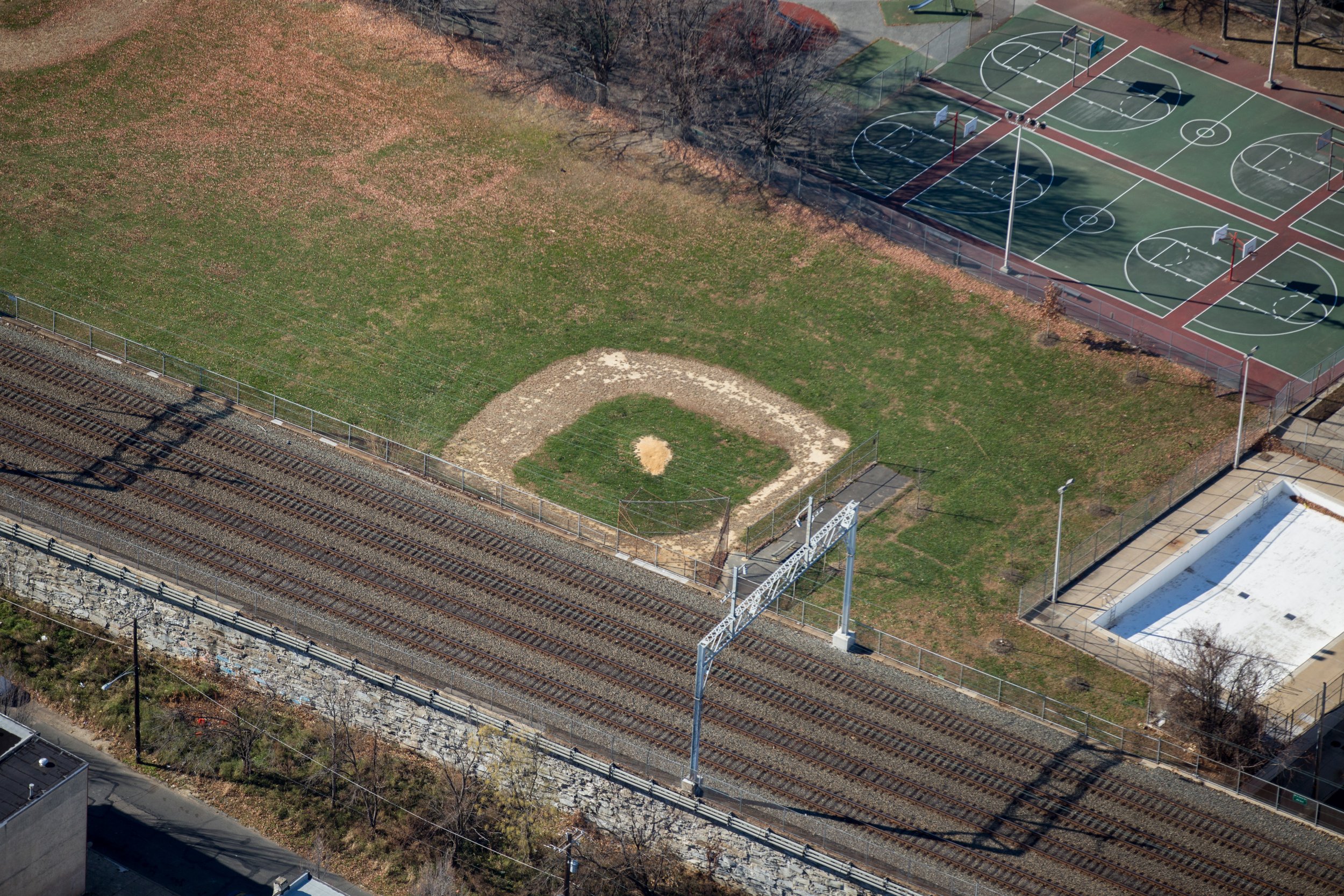
With space at a premium, this field fits snugly next to the main SEPTA train line through north Philadelphia, just south of Temple University Station.
We have used drones to take photographs since 2015. In those ten years, we’ve perfected our technique across different venues, with new technologies, and in compliance with evolving safety standards. We’ve also adapted to the unique challenges of summertime photography. For instance, warm air and direct sunlight make drone batteries prone to overheating, so we come prepared with extra long-life batteries to make the most of the long daylight.
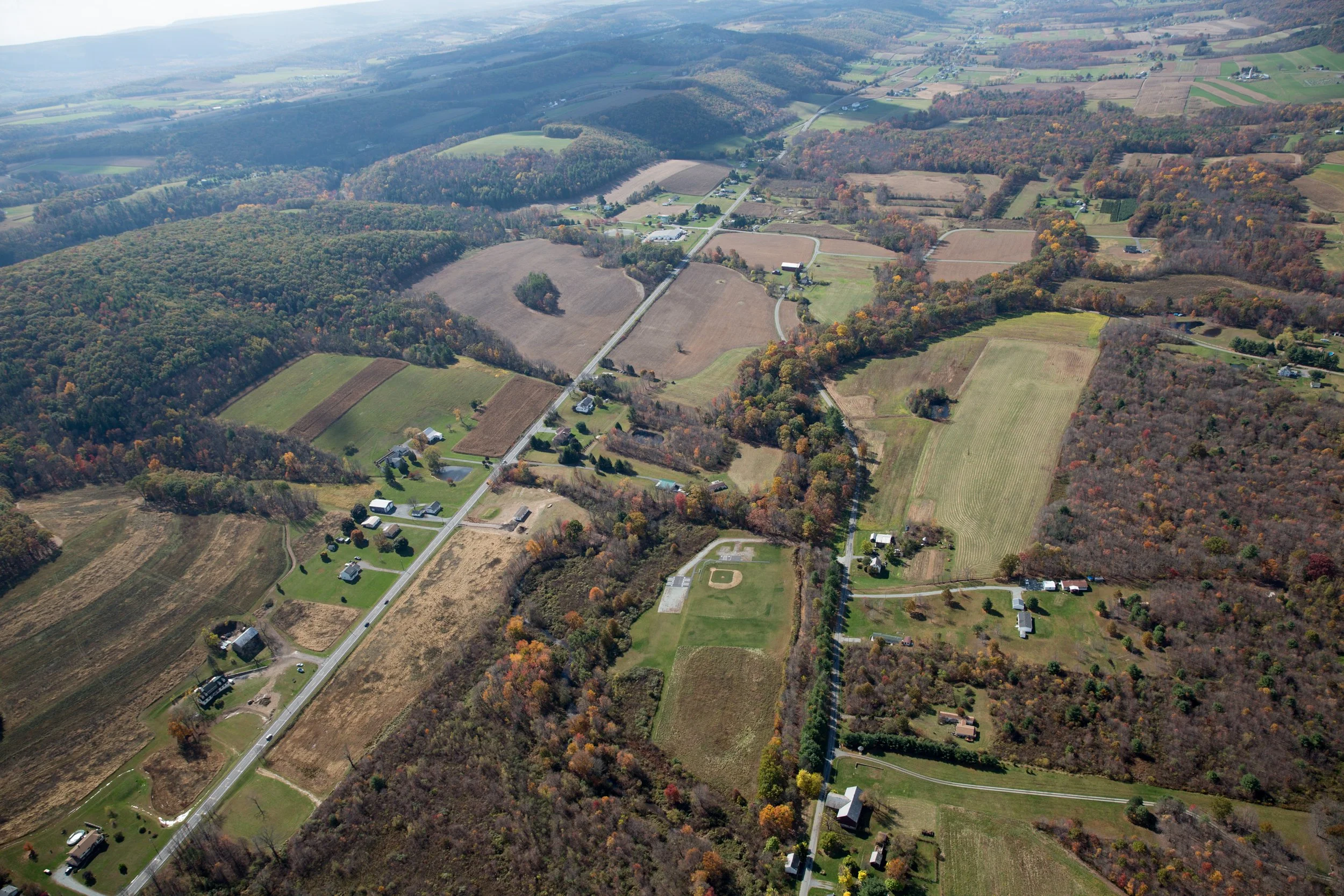
The area near Andreas, Pennsylvania, has plenty of agricultural fields—but can you spot the baseball one?
All baseball diamonds share the same unmistakable shape, but no two are exactly alike—much like snowflakes. Even within the same park, fields can vary in their use of grass, turf, dirt, and sand. The flatness and lack of nearby structures to overshadow them means that each field’s unique texture is on full display.
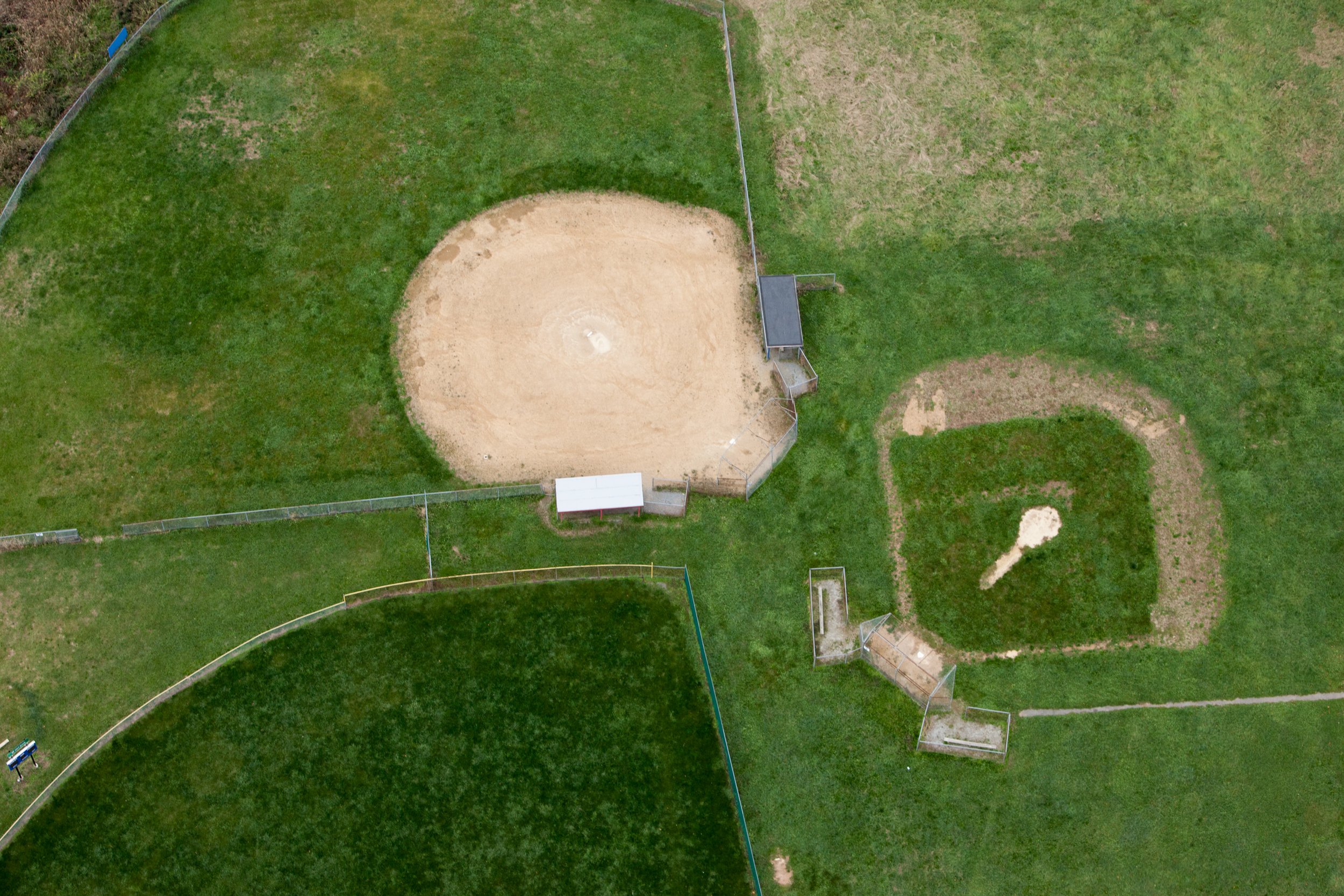
Different combinations of grass and dirt areas distinguish fields from one another.
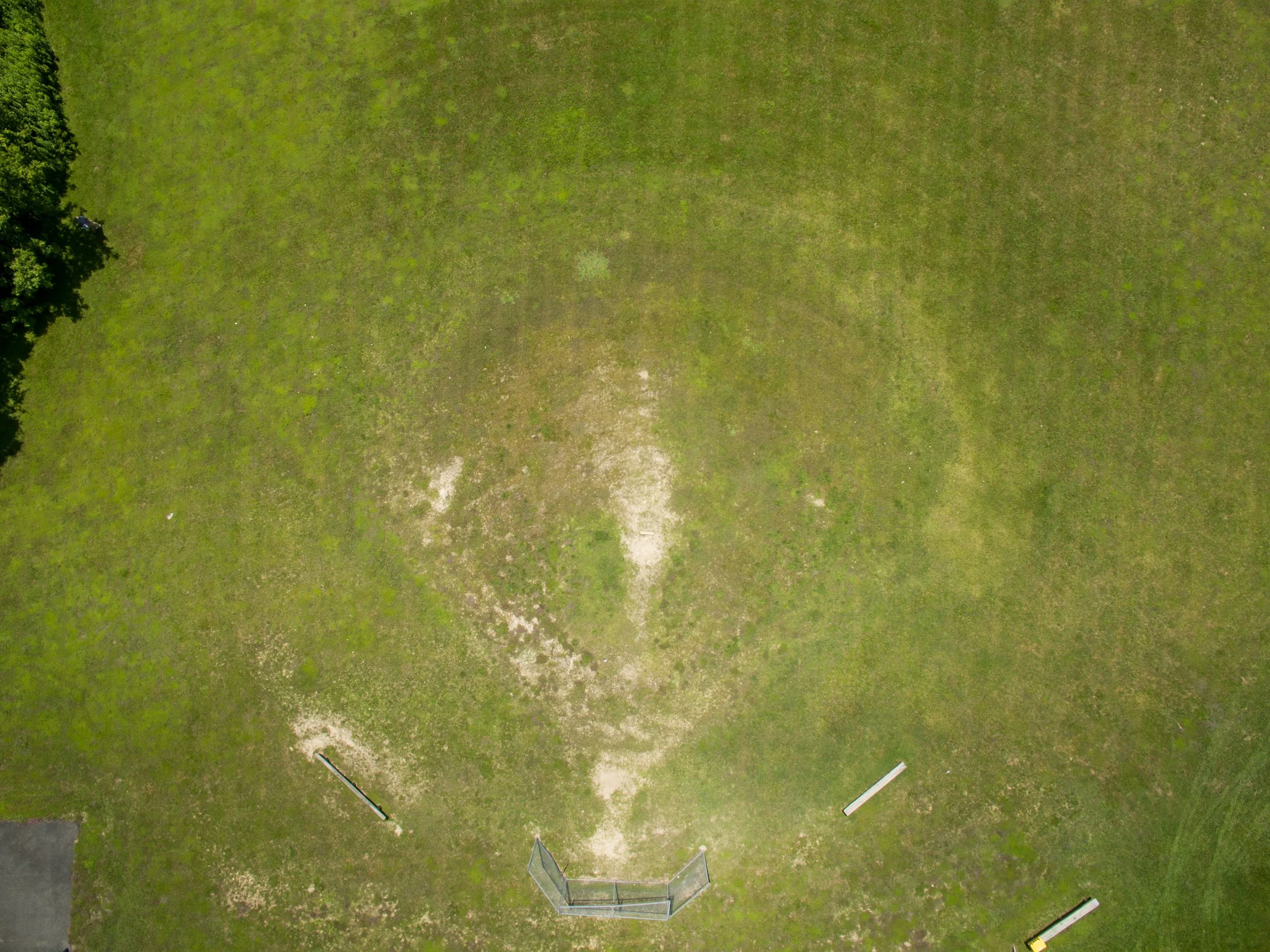
Years of wear have created the outline of an infield—no dirt or markings needed!
When photographing residences, I’m often asked to show off the landscapers’ handiwork in addition to the architects’ and builders’ contributions. A similar artistry can be seen in the elaborate mowing patterns of well-manicured outfields.
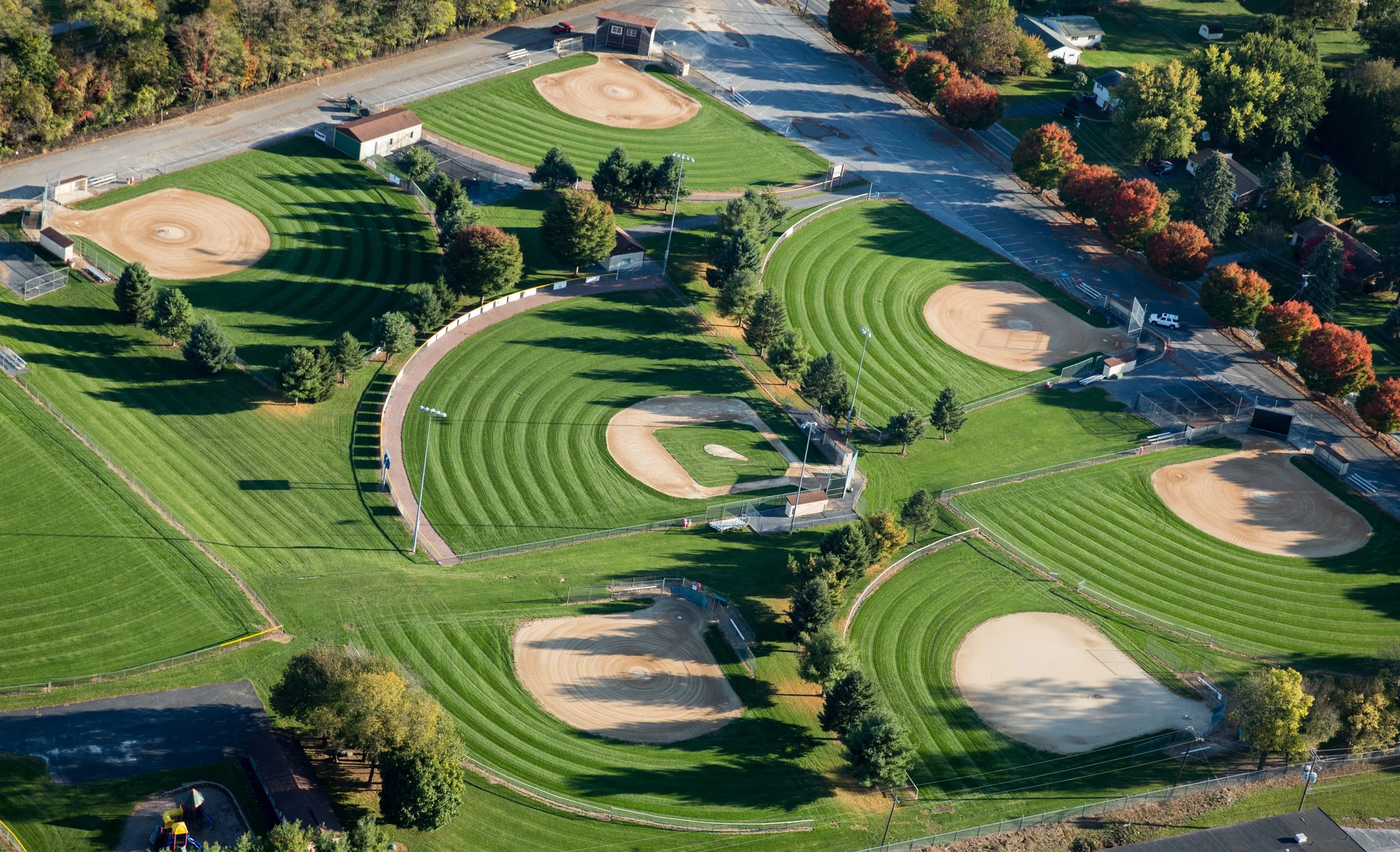
A view from above highlights the unique mowing patterns created by groundskeepers.